5 Hidden Costs in Logistics: Silently Eating Your Profits
Table of Contents
5 Hidden Costs in Logistics
In the Indian logistics sector, the conversation almost always starts with one question: “What is the rate per ton?”
For most Logistics Managers and Business Owners, negotiating the lowest possible freight rate feels like a win. If you save ₹500 on a trip from Hyderabad to Mumbai, it looks like a direct saving on the balance sheet.
But here is the reality: The freight rate is only the tip of the iceberg.
The real money in supply chain management is often lost in the inefficiencies that happen around the truck—the delays, the damages, and the administrative chaos. These “hidden costs” can inflate your actual logistics bill by 15-20% without you even realizing it.
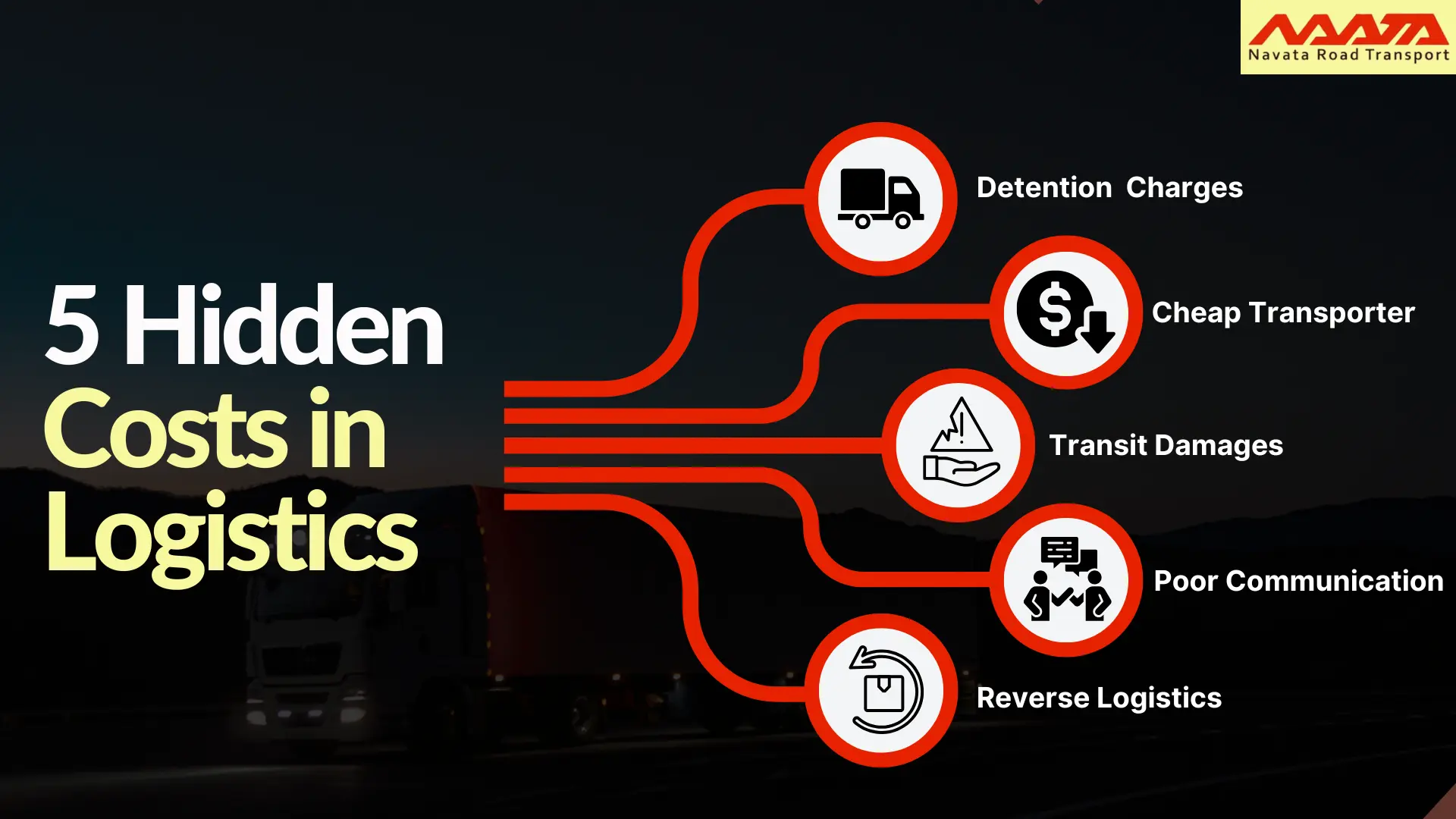
If you are only looking at the L1 (Lowest) quote, you might be missing the bigger picture. Here are the 5 hidden costs that are likely eating into your profit margins right now.
1. Detention Charges
Detention is the silent killer of logistics efficiency. This fee kicks in when a truck is forced to wait at your loading or unloading point beyond the agreed-upon time (usually 24 hours).
In India, manual loading processes, labor strikes, or simple paperwork delays at the factory gate often cause trucks to wait for 12 to 48 hours. Transporters charge heavy “Halting Charges” for this idle time—ranging anywhere from ₹2,000 to ₹5,000 per day depending on the vehicle type.
The Hidden Cost: It isn’t just the penalty fee. When a truck is stuck at your dock, your goods aren’t moving, and your inventory turnover slows down. You are paying for a warehouse on wheels that isn’t going anywhere.
2. The "Cheap Transporter" Tax
We all want to save money, but hiring the cheapest, unorganized transporter often comes with a high price tag attached to reliability.
When you book a truck solely based on the lowest price, you are often dealing with brokers who may not own their own fleet. The risk here is the dreaded last-minute cancellation. If a cheap truck cancels 2 hours before pickup because they found a better load elsewhere, you are left stranded.
The Hidden Cost: You are now forced to go back to the market and book a vehicle at a “Spot Rate” or “Urgent Rate,” which can be 20-30% higher than your original budget. You saved ₹500 on the booking, but lost ₹5,000 on the emergency replacement.
Road conditions in India are improving, but they are still unpredictable. If you choose a logistics partner who uses older vehicles or poor stacking techniques, the risk of damage increases significantly.
The Hidden Cost:
Direct Loss: The actual value of the broken or spoiled goods.
Administrative Drain: The time your team spends documenting the damage, clicking photos, and fighting for insurance claims—which can take months to process—is time taken away from growing your business.
Brand Reputation: If a distributor receives a damaged carton, they don’t blame the truck driver; they blame your brand. That loss of trust is harder to recover than money.
How much time does your logistics team spend on the phone every day asking, (Where is the truck?)
In an era of GPS and SIM-based tracking, manual tracking is an expensive habit. If you are working with multiple small transporters who don’t provide tech visibility, your staff is spending hours making calls, chasing drivers, and relaying vague updates to your customers.
The Hidden Cost:If a manager earning a good salary spends 4 hours a day chasing phones instead of planning strategy, you are paying a premium for low-value work. Automation isn’t just a convenience; it’s a cost-saving mechanism for your payroll.
5. Reverse Logistics (The Double Cost)
Returns are painful for any business, but in logistics, they are a double expense. When a shipment is rejected due to damage, wrong delivery, or delay, you have to bring it back.
The Hidden Cost:
Double Freight: You pay to send it, and you pay to bring it back.
Secondary Damage: Return loads are rarely packed as carefully as the original dispatch. By the time the rejected goods reach your warehouse, they are often in scrap condition, turning a potential salvage into a total write-off.
To truly optimize your supply chain in 2026, the focus must shift from “Lowest Freight Rate” to “Lowest Total Cost of Logistics.”
A reliable logistics partner might charge a fraction more upfront, but by eliminating detention, reducing damages, and providing automated tracking, they often save you significantly more in the long run. The goal isn’t just to move goods cheap; it’s to move them smart.
Thank You For Reading: 5 Hidden Costs in Logistics: Silently Eating Your Profits