What Is Logistics? Process, Types & Benefits
Table of Contents
What is Logistics?
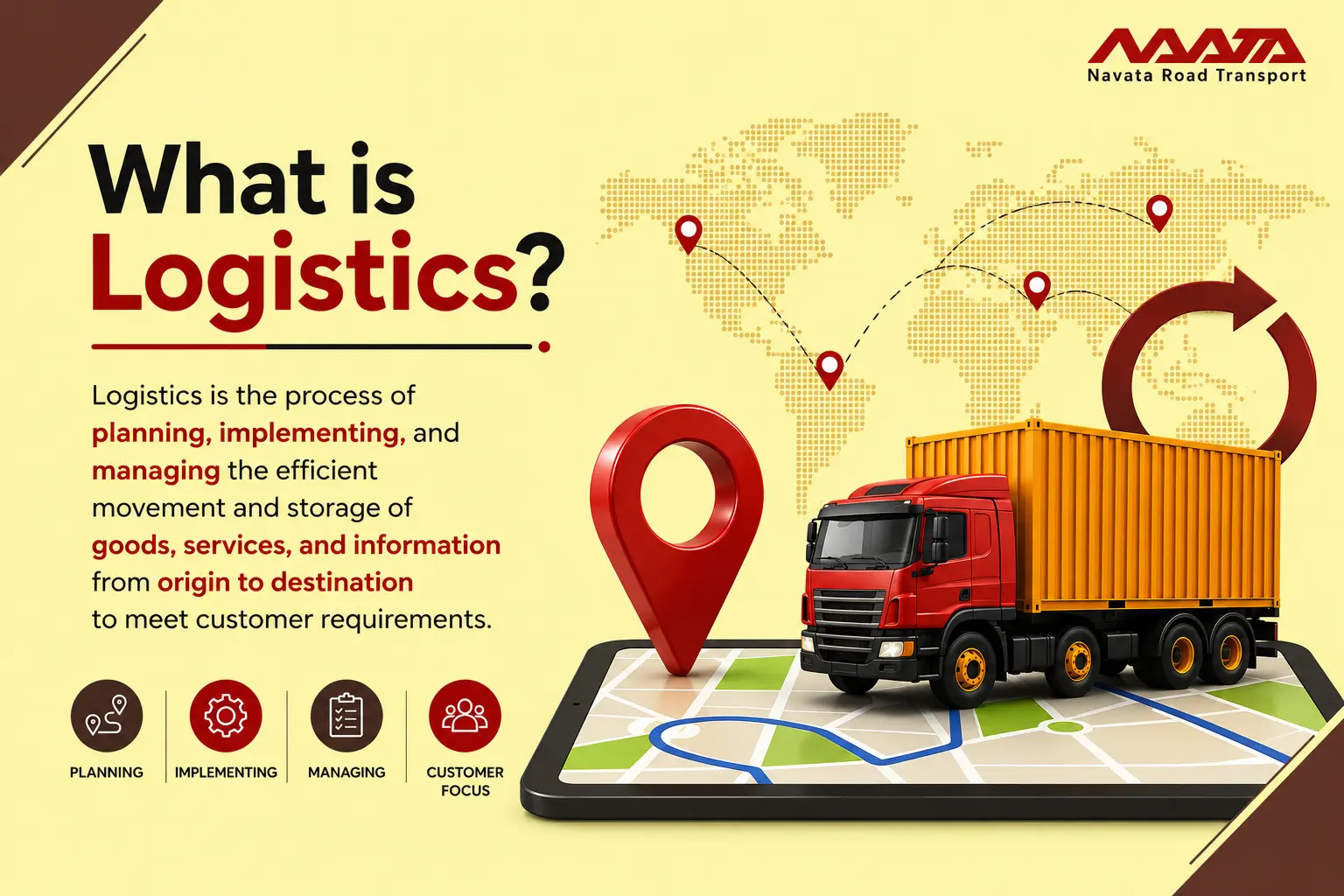
Logistics is the process of planning, managing, and controlling the movement and storage of goods, services, and information from the point of origin to the point of destination.
In simple terms, logistics ensures the right product reaches the right place, at the right time, in the right condition, and at the right cost.
It includes key activities such as transportation, warehousing, inventory management, order fulfillment, and returns, helping businesses move goods efficiently and reliably.
You May Also Like to Read: 14 Easy Inventory Management Techniques for Better Logistics Operations
Importance of logistics for Businesses
It’s easy to think of logistics as a back-office cost center. In reality, it directly shapes whether customers stay or leave, and whether a business makes money or bleeds it.
Customer satisfaction
Late deliveries, damaged goods, and wrong shipments are some of the fastest ways to lose a customer. Reliable logistics is often invisible when it works and impossible to ignore when it doesn’t.
Cost reduction
Poor route planning, half-empty trucks, and disorganized warehouses quietly drain margins. A well-run logistics operation cuts fuel spend, storage costs, and wasted labor.
Faster delivery
Speed has become a competitive weapon, not a bonus feature. Businesses that can promise (and keep) shorter delivery windows win more orders, especially in e-commerce and B2B supply.
Better inventory control
Good logistics means knowing what you have, where it is, and how fast it’s moving. That prevents both stockouts (lost sales) and overstocking (tied-up cash).
Process of Logistics
Effective logistics is not a singular activity but rather a symphony of interconnected functions working in harmony. These fundamental principles guide successful logistics operations, ensuring seamless flow and optimal outcomes. The key pillars that form the bedrock of robust logistics include:
1.Planning
Before anything moves, someone has to plan it. This means forecasting demand, deciding how much inventory is needed, choosing transport routes, and setting delivery timelines. Good planning prevents last-minute scrambling later in the chain.
2. Procurement
Procurement is sourcing the raw materials, components, or finished goods a business needs. This step involves selecting suppliers, negotiating terms, and making sure materials arrive on schedule so production or fulfillment isn’t held up.
3. Transportation
This is the part most people picture when they hear “logistics” moving goods by road, rail, air, or water. Transportation decisions balance cost, speed, distance, and the nature of the cargo itself.
4. Warehousing
Goods rarely move directly from factory to customer. They sit in warehouses along the way, waiting to be sorted, stored, or consolidated with other shipments. Warehousing also includes handling, labeling, and quality checks.
5. Inventory Management
This is the ongoing job of tracking stock levels, monitoring what’s selling, and making sure inventory data matches physical reality. Inventory management is what keeps a business from either running out of product or drowning in unsold stock.
6. Order Fulfillment
Once an order comes in, fulfillment covers picking the right items, packing them correctly, and preparing them for dispatch. In e-commerce especially, fulfillment speed and accuracy directly affect customer reviews.
7. Distribution
Distribution is the final push getting goods from a warehouse or distribution center to the end customer or retail point. This includes last-mile delivery, which is often the most expensive and complex part of the entire process.
8. Returns and Reverse Logistics
Not every shipment stays with the customer. Reverse logistics handles returns, exchanges, repairs, and recycling moving goods backward through the supply chain. Businesses that handle this well protect both customer trust and profit margins.
You May Also Like to Read: 8 Best Practices for Efficient Transportation Operations in 2025
Types of Logistics
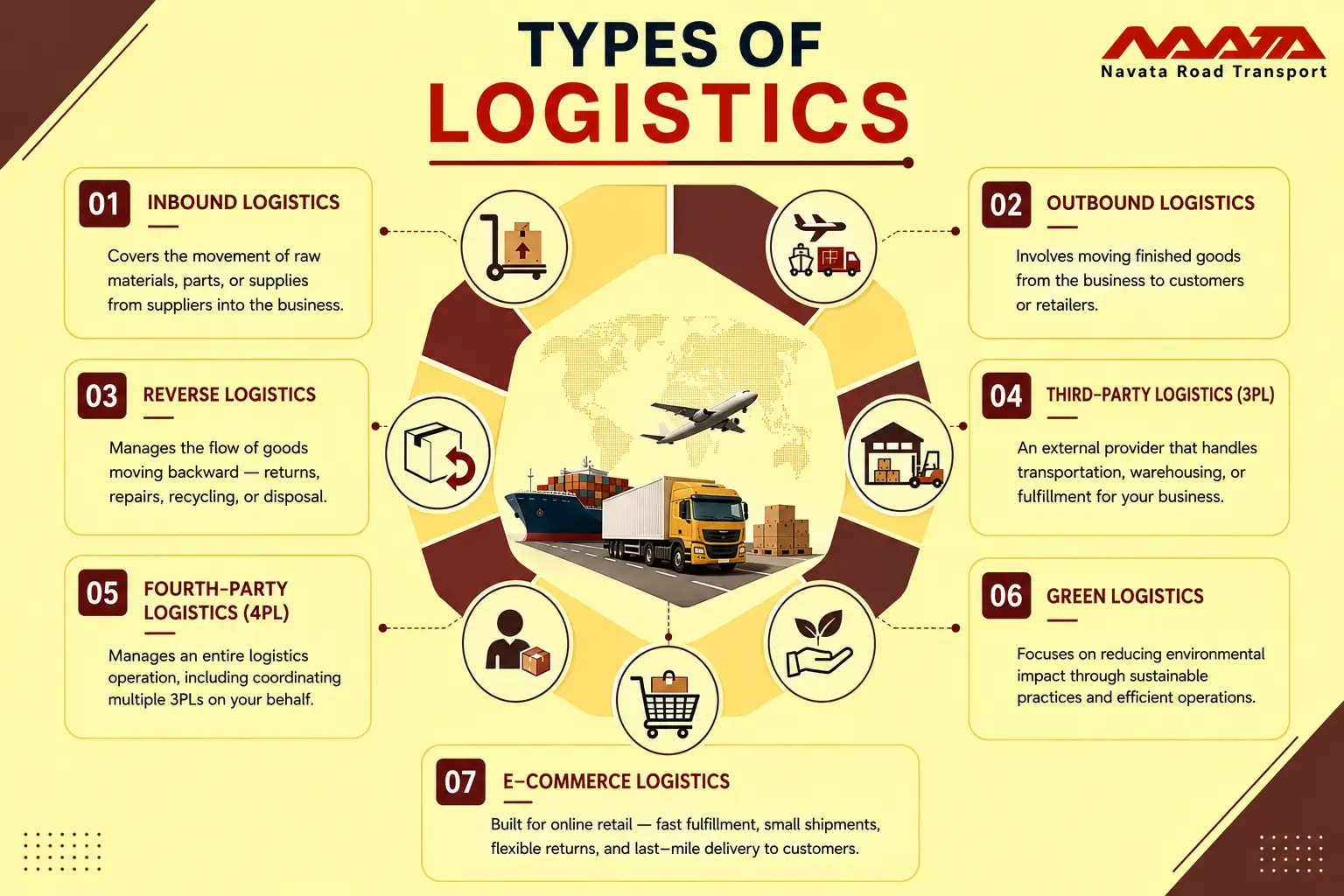
Logistics isn’t one activity it branches into several types depending on the direction goods are moving and who’s managing the process. Understanding the types of logistics helps clarify which part of the chain a business is actually responsible for.
1. Inbound Logistics
Inbound logistics covers the movement of raw materials, parts, or supplies into a business typically from suppliers to a warehouse or production facility. This is the “getting stuff in” side of the operation.
2. Outbound Logistics
Outbound logistics is the reverse: moving finished goods out of a warehouse or facility to the customer or retailer. This is the “getting stuff out” side, and it’s usually what customers actually notice.
3. Reverse Logistics
Reverse logistics manages the flow of goods moving backward returns, repairs, recycling, or disposal. It’s often overlooked in planning, even though return volumes in e-commerce can be substantial.
4. Third-Party Logistics (3PL)
A 3PL provider is an outside company hired to handle some or all of a business’s logistics functions transportation, warehousing, or fulfillment. Businesses use 3PLs to save on infrastructure costs and tap into established networks.
5. Fourth-Party Logistics (4PL)
A 4PL takes it a step further, managing an entire logistics operation on a business’s behalf, including coordinating multiple 3PLs. Think of a 4PL as the strategic layer sitting above the day-to-day execution.
6. Green Logistics
Green logistics focuses on reducing the environmental impact of logistics operations through fuel-efficient routing, sustainable packaging, and lower-emission transport choices. It’s becoming a bigger priority as regulations and customer expectations shift.
7. E-commerce Logistics
E-commerce logistics is built specifically around online retail fast fulfillment, frequent small shipments, flexible returns, and last-mile delivery to individual homes rather than bulk deliveries to businesses.
Types of Logistics Compared
| Type | Direction / Focus | Typical Use Case |
|---|---|---|
| Inbound Logistics | Supplier → Business | Receiving raw materials or stock |
| Outbound Logistics | Business → Customer | Delivering finished goods |
| Reverse Logistics | Customer → Business | Returns, repairs, recycling |
| 3PL | Outsourced execution | Warehousing and transport handled externally |
| 4PL | Outsourced strategy + execution | Full logistics management by a partner |
| Green Logistics | Sustainability-focused | Reducing emissions and waste |
| E-commerce Logistics | Direct-to-consumer | Fast, small-batch online order fulfillment |
Benefits of Logistics
When managed effectively, logistics does more than move goods from one place to another. It helps businesses control costs, manage inventory, improve delivery performance, and create a better customer experience. Efficient logistics can also give businesses greater visibility and flexibility when responding to operational disruptions.
1. Lower Operational Costs
Efficient transportation planning, route optimization, warehouse operations, and resource utilization can help businesses reduce unnecessary spending. By identifying inefficiencies and minimizing waste, companies can better control costs related to fuel, labor, storage, and freight.
2. Better Inventory Management
Effective logistics helps businesses maintain better control over inventory across warehouses and distribution networks. Improved inventory visibility can reduce the risk of carrying excess stock while helping businesses avoid stockouts that can result in missed sales and unhappy customers.
3. Faster and More Reliable Delivery
A well-organized logistics process improves the coordination of transportation, warehousing, order fulfillment, and distribution. This can reduce delays and help businesses deliver products to customers more efficiently and reliably.
4. Improved Customer Experience
Customers expect accurate orders, timely deliveries, and products that arrive in good condition. Efficient logistics helps businesses meet these expectations, which can improve customer satisfaction and encourage repeat business.
5. Improved Profitability
Lower operational costs, better inventory utilization, efficient fulfillment, and stronger customer retention can all contribute to improved business performance. Logistics therefore plays an important role in supporting profitability rather than simply functioning as an operational expense.
6. Greater Business Scalability
As order volumes increase, logistics processes need to handle greater demand without causing significant delays or operational bottlenecks. A well-planned logistics network provides a stronger operational foundation for businesses as they grow.
7. Improved Supply Chain Visibility
Real-time information about inventory, shipments, and transportation enables businesses to understand where goods are and respond more quickly when problems arise. Better visibility can support faster decision-making, improved coordination, and more proactive logistics management.
8. Better Risk Management and Resilience
Logistics planning helps businesses prepare for potential disruptions such as transportation delays, supplier issues, changing demand, or damaged shipments. Greater visibility and operational flexibility can help companies identify problems earlier and reduce their impact on customers and business operations.
Challenges in Logistics
Logistics operations rarely run exactly as planned. Businesses must manage changing transportation costs, delivery disruptions, inventory issues, technology gaps, workforce constraints, and increasing pressure to operate more sustainably. These challenges can affect costs, delivery reliability, customer satisfaction, and overall supply chain performance.
1. Rising Transportation and Fuel Costs
Fuel is a major operating cost in road transportation, so changes in fuel prices can quickly increase freight and delivery expenses. Inefficient routing, empty return trips, and poor vehicle utilization can further increase transportation costs.
2. Delivery Delays and Unreliable Transit Times
Deliveries can be delayed by traffic congestion, adverse weather, documentation issues, infrastructure constraints, and capacity shortages. When transit times become unpredictable, businesses may face missed delivery commitments, higher operating costs, and customer dissatisfaction.
3. Inventory Inaccuracies
Inaccurate inventory records can make it difficult for businesses to understand what stock is available and where it is located. This can result in overstocking, stockouts, inefficient warehouse utilization, and problems fulfilling customer orders. Better inventory visibility and connected systems are important for reducing these issues.
4. Supply Chain Disruptions
A disruption at one stage of the supply chain can affect many other operations. Delayed inbound shipments, transportation disruptions, capacity shortages, or supplier problems may interrupt production schedules and delay deliveries to customers. This makes supply chain planning and operational flexibility increasingly important.
5. Last-Mile Delivery Challenges
The final stage of delivering goods to the customer can be one of the most complex parts of the logistics process. Traffic congestion, failed delivery attempts, remote locations, and high service expectations can make last-mile operations difficult to manage efficiently. Infrastructure, technology, and data integration are also important factors in improving last-mile performance.
7. Workforce and Driver Shortages
Logistics depends heavily on skilled drivers, warehouse employees, and operational staff. Workforce shortages or high employee turnover can create capacity constraints and disrupt the movement and handling of goods. Recent Indian government action on trailer-driver shortages also highlights how workforce constraints can affect cargo operations.
8. Sustainability and Environmental Pressure
Businesses are under growing pressure to reduce fuel consumption, emissions, and waste across their logistics operations. However, balancing environmental goals with delivery speed, operational reliability, and cost efficiency can be challenging. Improvements such as better route planning, cleaner vehicles, and more efficient warehousing can help address these competing priorities.
Technology in Modern Logistics
Logistics today runs on far more than trucks and paperwork. Technology has become the backbone of how modern operations stay competitive.
1. GPS tracking:- real-time visibility into where shipments are at any given moment
2. Warehouse Management Systems (WMS):- software that manages inventory, storage locations, and picking processes
3. Transportation Management Systems (TMS):- tools for planning routes, managing carriers, and tracking freight costs
4. IoT (Internet of Things):- connected sensors that monitor conditions like temperature or humidity in transit
5. AI:- used for demand forecasting, route optimization, and predictive maintenance
6. Automation:- robotics and automated systems in warehouses that speed up sorting and packing
7. RFID:- radio-frequency tags that track goods without manual scanning
8. Barcode systems:- a simpler, widely used method for tracking inventory movement
You May Also Like to Read: What is Logistics and Supply Chain Management and it’s Ultimate Concept
Conclusion
Logistics touches almost every part of running a business, even when it stays completely out of sight. It’s the difference between a shipment arriving on time in good condition and a customer who never orders again. Understanding the process, the different types of logistics, and how it connects to the wider supply chain gives businesses a real edge not just in cutting costs, but in building the kind of reliability customers actually notice and remember.
Whether you’re managing logistics in-house or exploring a partner to handle it for you, getting the fundamentals right pays off at every stage of the chain. If your business is looking for dependable transportation, warehousing, or end-to-end logistics support, Navata’s logistics solutions are built to handle exactly that.
What is logistics management?
Logistics management is the coordination and oversight of logistics activities, including transportation, warehousing, and inventory, to ensure goods move efficiently and cost-effectively.
What is the difference between logistics and supply chain management?
Logistics is one function within supply chain management, focused specifically on moving and storing goods. Supply chain management is the broader network covering sourcing, production, and logistics together.
What does a logistics company do?
A logistics company manages some or all of a business's transportation, warehousing, and fulfillment needs, often acting as a third-party or fourth-party logistics provider.
What is an example of logistics in action?
A common example is an FMCG shipment moving from a manufacturing plant to a regional warehouse, then out to individual retail stores, with tracking and inventory checks at each stage.
Recent Posts