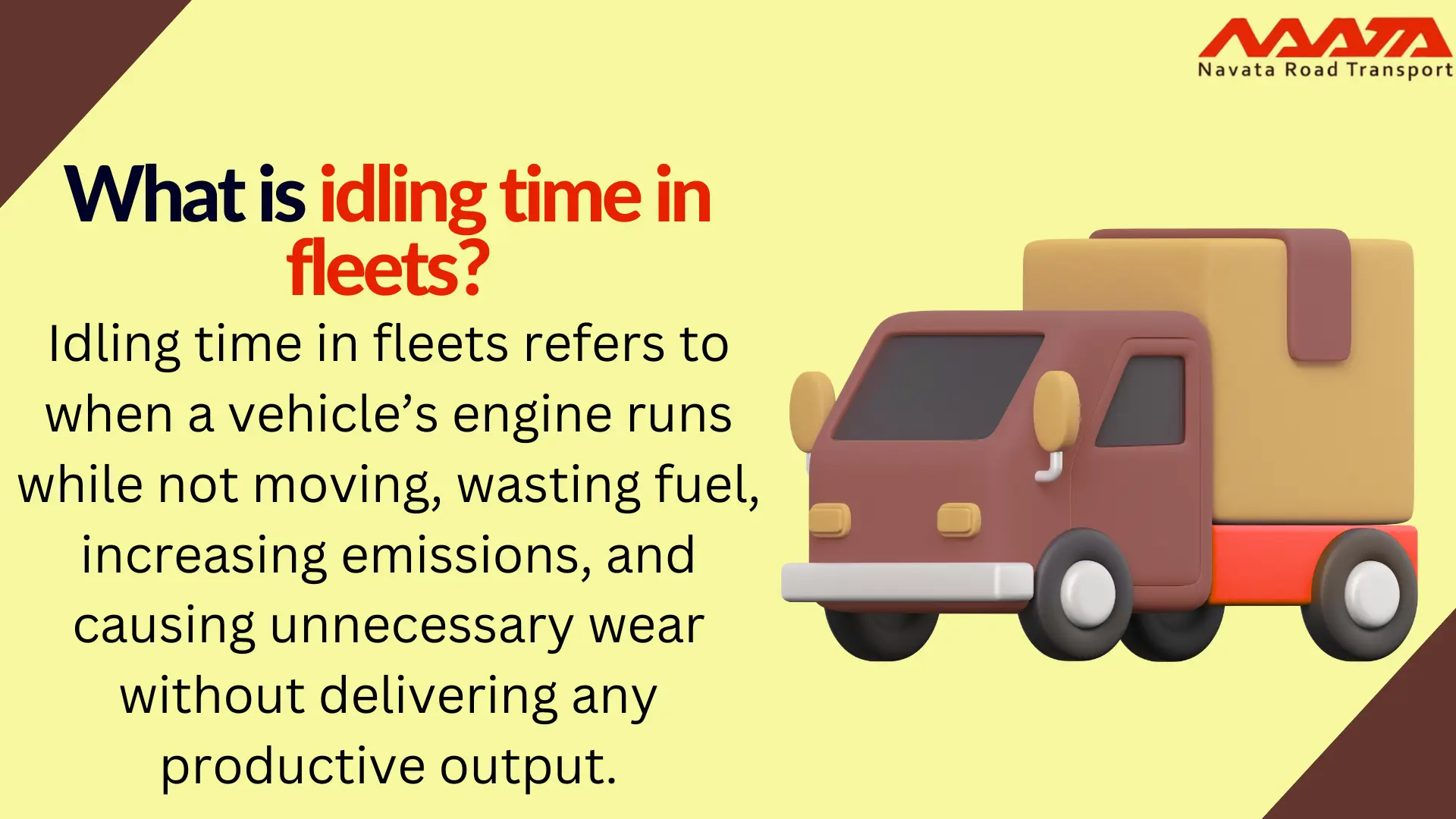
Excessive idling is one of the most overlooked fuel drains in logistics, silently inflating operating costs and reducing fleet efficiency. For transport companies managing tight margins, even a few minutes of unnecessary engine running can add up to thousands of litres of wasted fuel each year.
Beyond fuel burn, prolonged idling accelerates engine wear, increases maintenance expenses, and contributes to higher emissions — all of which directly impact fleet performance and profitability. As transportation operations become more data-driven, reducing idling time has shifted from a best practice to a critical operational KPI.
Understanding why idling happens, how to monitor it, and which strategies actually work is essential for every fleet manager aiming to cut costs and improve sustainability.
Idling is rarely intentional — it is the result of operational friction, environmental factors, and behavioural habits. Understanding these triggers helps fleets address the root cause instead of relying on generic instructions.
Traffic and Urban Congestion
Commercial vehicles operate heavily in metro corridors, industrial zones, and long city stretches with bottlenecks. Extended standstills at signals, toll plazas, and junctions create predictable idle hotspots.
Loading and Unloading Delays
Trucks often wait at docks with engines running. Poor dock scheduling, long queues, manual paperwork, and inconsistent warehouse coordination make idling unavoidable.
Driver Rest Breaks
On long-haul routes, drivers leave engines on to power the cabin AC, heating, or electronics, contributing significantly to idle hours.
Operational Habits and Incorrect Beliefs
Many drivers still assume restarting the engine uses more fuel than letting it run — a misconception outdated by modern engine systems.
Inefficient Route Planning
Routes that appear shorter may still pass through slow corridors, increasing idle duration. Fleets without dynamic routing suffer the most.
Climate-Based Factors
Extreme heat or cold forces drivers to keep engines running to maintain cabin comfort, especially in older trucks without auxiliary power systems.
Each of these factors compounds into heavy idle losses across large fleets.
Real Cost of Idling in Fleet Operations
Idling affects more than just fuel. It impacts every cost component that logistics companies track.
1. Fuel Loss at Scale
A heavy truck burns 2–3 litres per idle hour. Across hundreds of vehicles, this translates to:
Higher fuel bills
Lower kmpl efficiency
Higher operating costs per delivery
Reduced profitability across routes
Fuel is already the largest cost in road transport; idling accelerates this burden.
2. Accelerated Engine Wear
Every idle hour increases:
Engine oil contamination
Carbon buildup in cylinders
DPF clogging frequency
Overall engine degradation
Trucks reach service thresholds sooner, reducing asset lifespan and increasing maintenance expenditure.
3. Uptime and Productivity Loss
Higher idle time leads to:
More workshop visits
Increased unscheduled maintenance
Poor availability of vehicles
Reduced delivery capacity
Operational efficiency drops even if the fleet size remains the same.
4. Higher Emissions and Sustainability Impact
Idling produces CO₂, PM, and NOx emissions without generating any movement. For companies targeting greener logistics, lower emissions, and improved ESG metrics, controlling idling directly improves sustainability scores.
5. Hidden Operational Inefficiencies
Idling indicates bigger systemic issues:
Poor route planning
Inefficient warehouse coordination
Lack of telematics visibility
Weak driver discipline
It is a diagnostic metric that reflects the health of fleet operations.
Reducing idle time requires targeted interventions that combine technology, training, and operational restructuring.
1. Implement Telematics and Idle Monitoring
A cloud-based fleet management system provides:
Real-time idle tracking
Driver-wise idle performance
Location-based idle hotspots
Automated alerts for excessive idle durations
Fuel loss calculations
Analytics turn idle time from a hidden cost into visible performance metrics.
2. Optimize Routing With Real-Time Intelligence
Routing engines help avoid:
Congestion-prone areas
Road closures
Slow-moving corridors
Peak traffic hours
Dynamic rerouting significantly lowers city idle time and improves ETA accuracy.
3. Digitize Dock and Queue Management
Dock scheduling tools reduce unnecessary waiting by:
Assigning loading/unloading slots
Sending alerts when bays are free
Minimising queue lengths
Coordinating warehouse teams
This is one of the biggest idle reduction levers in B2B logistics.
4. Improve Driver Training and Behaviour
Behavioural idling is best solved through:
Regular coaching sessions
Performance scorecards
Incentive-based driving programs
Clear guidelines on engine shut-off thresholds
Training backed by telematics data creates measurable change.
5. Use Auxiliary Power Units (APUs) for Long-Haul Fleets
APUs allow drivers to use AC, heating, and cabin devices without running the main engine, cutting idle hours dramatically.
6. Introduce Company-Wide Idle Policies
Setting clear standards — like turning off engines beyond 120 seconds of standstill — helps reduce idle behaviour across the fleet.
7. Temperature-Controlled Engine Management
Modern trucks offer intelligent start-stop engines and temperature-based idle cut-off systems that automate idle reduction.
Why Reducing Idling Makes a Difference?
Lower idle time improves every key performance indicator in logistics:
Higher fuel efficiency
Lower cost per km
Longer engine life
Better fleet uptime
Accurate delivery schedules
Reduced carbon emissions
Higher operational productivity
For logistics companies operating in competitive markets, idle reduction offers one of the fastest, most measurable cost savings with minimal investment.
Idling is not just a minor operational issue — it is a systemic cost driver that weakens fleet profitability, vehicle health, sustainability efforts, and delivery performance. With rising fuel prices and increasing operational complexity, managing idle time is now a critical part of fleet optimization.
By leveraging telematics, smarter routing, dock digitization, behavioural coaching, and auxiliary power solutions, logistics companies can reduce idling significantly and create a more efficient, lean, and sustainable fleet.
Thank You For Reading: How to Reduce Idling Time: The Hidden Fuel Killer