What is CRM in Logistics (Customer Relationship Management)?

Table of Contents

What is CRM in Logistics?

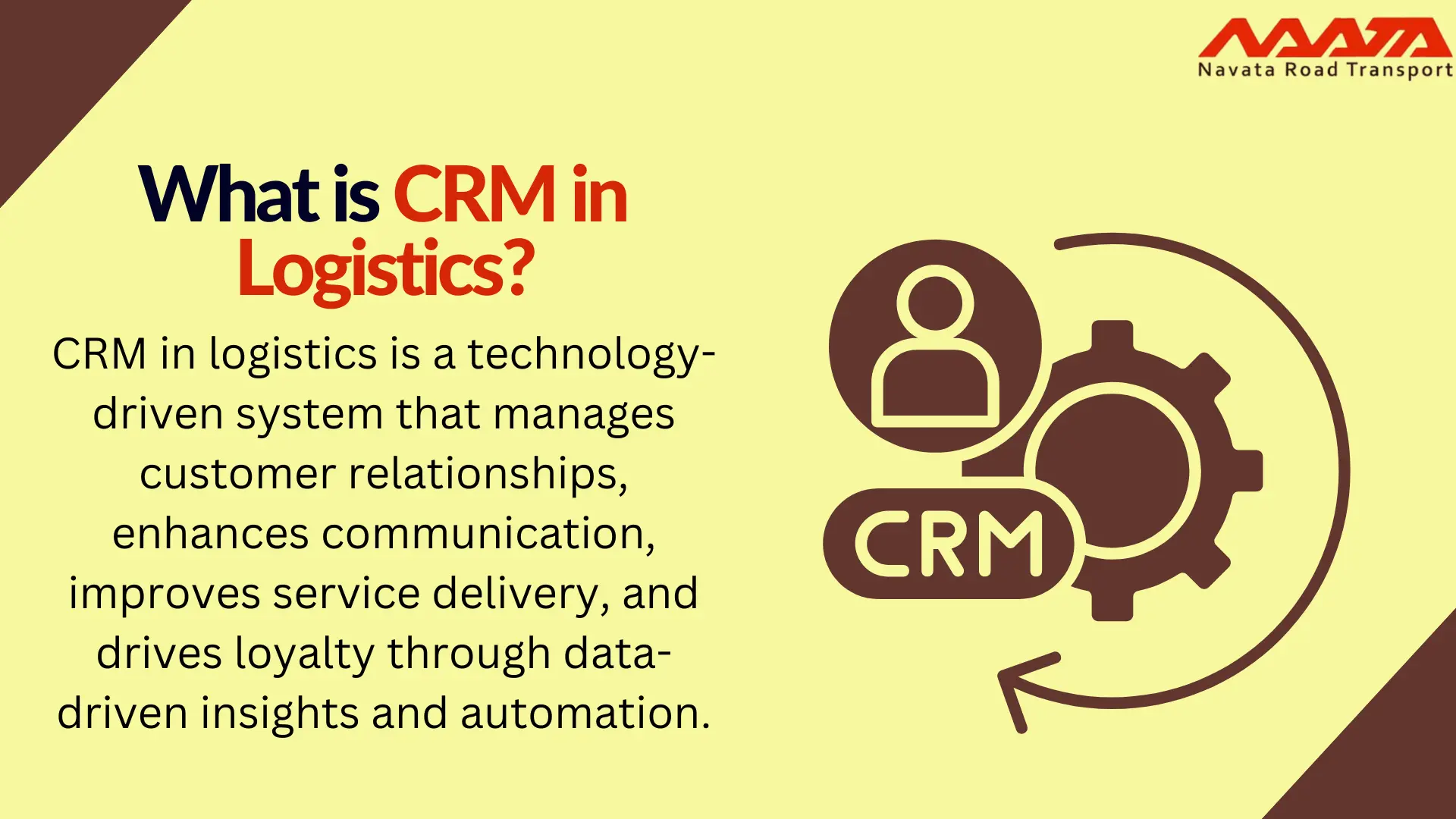
CRM in logistics is a technology solution that enables logistics and transportation companies to centralize and manage all customer interactions, service histories, and performance insights in one connected platform.

It allows service providers to link customer data (like communication history, preferences, and contracts) with operational data (such as shipment tracking, route status, and delivery performance). This unified visibility empowers teams to deliver faster responses, reduce errors, and enhance customer satisfaction — all while improving internal coordination between departments.

In simple terms, a logistics CRM system helps companies stay customer-focused while managing complex operations efficiently and profitably.

What is CRM in Logistics

5 Core Functions of a Logistics CRM

1. Centralized Customer Management

A CRM acts as a single source of truth for all customer-related data — from initial lead contact to post-delivery support.

It consolidates client details, SLA agreements, invoices, and communication logs, ensuring every team member has real-time access to updated and accurate information.

2. Real-Time Tracking and Visibility

Integrated with TMS (Transportation Management Systems) and WMS (Warehouse Management Systems), CRM tools provide end-to-end visibility into shipments, order progress, and delivery status.

Customers receive instant updates, while managers can proactively manage exceptions such as route delays or rescheduling.

3. Automated Workflows and Notifications

Automation eliminates repetitive tasks like sending updates, confirmations, and feedback forms.

This ensures seamless communication without manual follow-ups — reducing response time and improving client engagement.

4. Performance Analytics and Customer Insights

CRM systems turn raw operational data into actionable insights.

Dashboards display KPIs such as delivery punctuality, communication efficiency, and customer satisfaction scores, enabling continuous service optimization.

5. Lead, Quotation, and Contract Management

For logistics sales teams, CRM simplifies the process of lead tracking, quote generation, and contract renewals.

With automated reminders and deal pipelines, no opportunity is missed — leading to better conversion rates and higher recurring business.

Why CRM is Essential for Logistics and Transportation Companies?

1. Enhanced Customer Experience

In logistics, service reliability equals customer loyalty.

A CRM ensures transparency through real-time shipment visibility, automated updates, and instant query resolution — fostering trust and long-term client relationships.

2. Operational Efficiency

Manual processes lead to delays and errors.

A logistics CRM streamlines internal communication and automates documentation, route tracking, and client follow-ups — saving hours of administrative effort.

3. Data-Driven Decision Making

By analyzing shipment patterns, client preferences, and operational performance, logistics companies can forecast demand, optimize capacity, and design more efficient service plans.

4. Collaboration and Accountability

With all data centralized, CRM platforms ensure that every stakeholder — from drivers to dispatchers to customer service agents — has access to the same real-time information, improving accountability across departments.

Benefits of CRM in Logistics

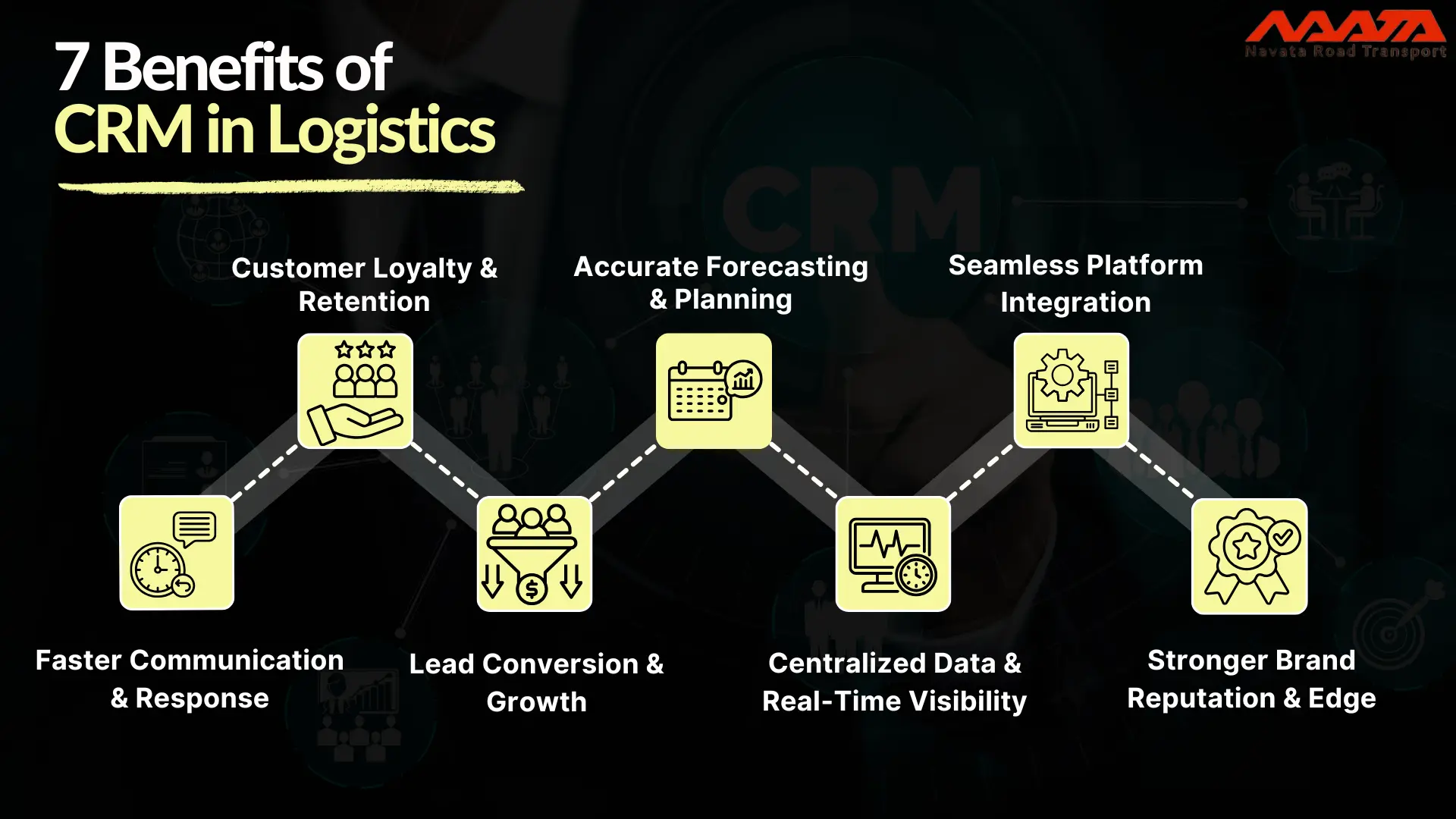
1. Faster Communication & Response

A cloud-based CRM ensures seamless communication between teams and customers.

Automated notifications, live chat integration, and centralized messaging eliminate delays in updates or approvals.

This reduces manual back-and-forth and enhances transparency across the logistics chain.

2. Boosted Customer Loyalty & Retention

With real-time tracking and automated service alerts, customers are always informed about their shipments.

The CRM also tracks satisfaction metrics and feedback trends, allowing logistics companies to improve service delivery and maintain client loyalty through proactive engagement.

3. Higher Lead Conversion & Growth

By managing every sales inquiry and tracking client interactions, CRM systems help logistics businesses convert more leads into contracts.

Follow-ups, quotations, and renewals are automated, ensuring no potential deal slips through.

This directly strengthens the company’s growth pipeline.

4. Accurate Forecasting & Planning

CRM analytics provide historical insights on customer demand, seasonal trends, and service preferences.

By analyzing these patterns, logistics teams can forecast shipment volumes, plan route capacities, and allocate resources more efficiently — leading to better cost control and service reliability.

5. Centralized Data & Real-Time Visibility

A single dashboard gives complete access to customer details, order history, and current shipment status.

This unified data view helps eliminate silos, minimize miscommunication, and support data-driven decisions for faster issue resolution.

6. Seamless Platform Integration

When integrated with ERP, TMS, and WMS solutions, a CRM synchronizes operational and customer data in real time.

This ensures accuracy in billing, order tracking, and service delivery — giving both the business and the client complete operational clarity.

7. Stronger Brand Reputation & Edge

Companies that use CRM platforms effectively can offer proactive communication, customized services, and faster resolutions.

This consistency builds trust and positions them as reliable logistics partners in a highly competitive market.

What is CRM in Logistics

Integration: The Key to Intelligent Logistics

Modern logistics relies on ecosystem connectivity.

When CRM systems integrate with transport, warehouse, and accounting platforms, data moves seamlessly across the supply chain — reducing manual input and duplication errors.
For example:

  • Integrating CRM with a TMS allows automated shipment notifications and accurate ETAs.
  • Linking with ERP ensures invoicing, order tracking, and financial updates happen simultaneously.

This integration enables logistics providers to operate smarter, respond faster, and deliver better service outcomes.

Conclusion

CRM in logistics is no longer just a customer database — it’s a strategic intelligence system that enhances visibility, automation, and customer engagement across the entire transport network.

By leveraging CRM for logistics operations, businesses can streamline communication, improve forecasting, and deliver superior customer experiences — all while reducing costs and boosting long-term profitability.

As logistics continues to digitize, CRM-driven logistics solutions will define the next generation of efficient, customer-centric supply chains.

Thank You For Reading: What is CRM in Logistics (Customer Relationship Management)?

Powered By 360Presence

Leave a Replay