Trucking Tracking System in India: How It Works and How to Track Your Shipment
Table of Contents
Every day, thousands of shipments move across India’s road network, and the businesses and individuals waiting on them want one simple thing: to know where their consignment is right now. A trucking tracking system in India is the technology GPS, RFID, telematics, and connected software that makes that visibility possible, turning a truck’s physical location into a live map, a status update, and a delivery estimate you can check from a phone.
This guide covers how these systems actually work, the real operational benefits they deliver, the different technology types in use across Indian fleets, and how to choose one. If you landed here because you’re trying to track an actual Navata shipment, the next section gets you there directly.
Looking to Track Your Navata Shipment? Here's How
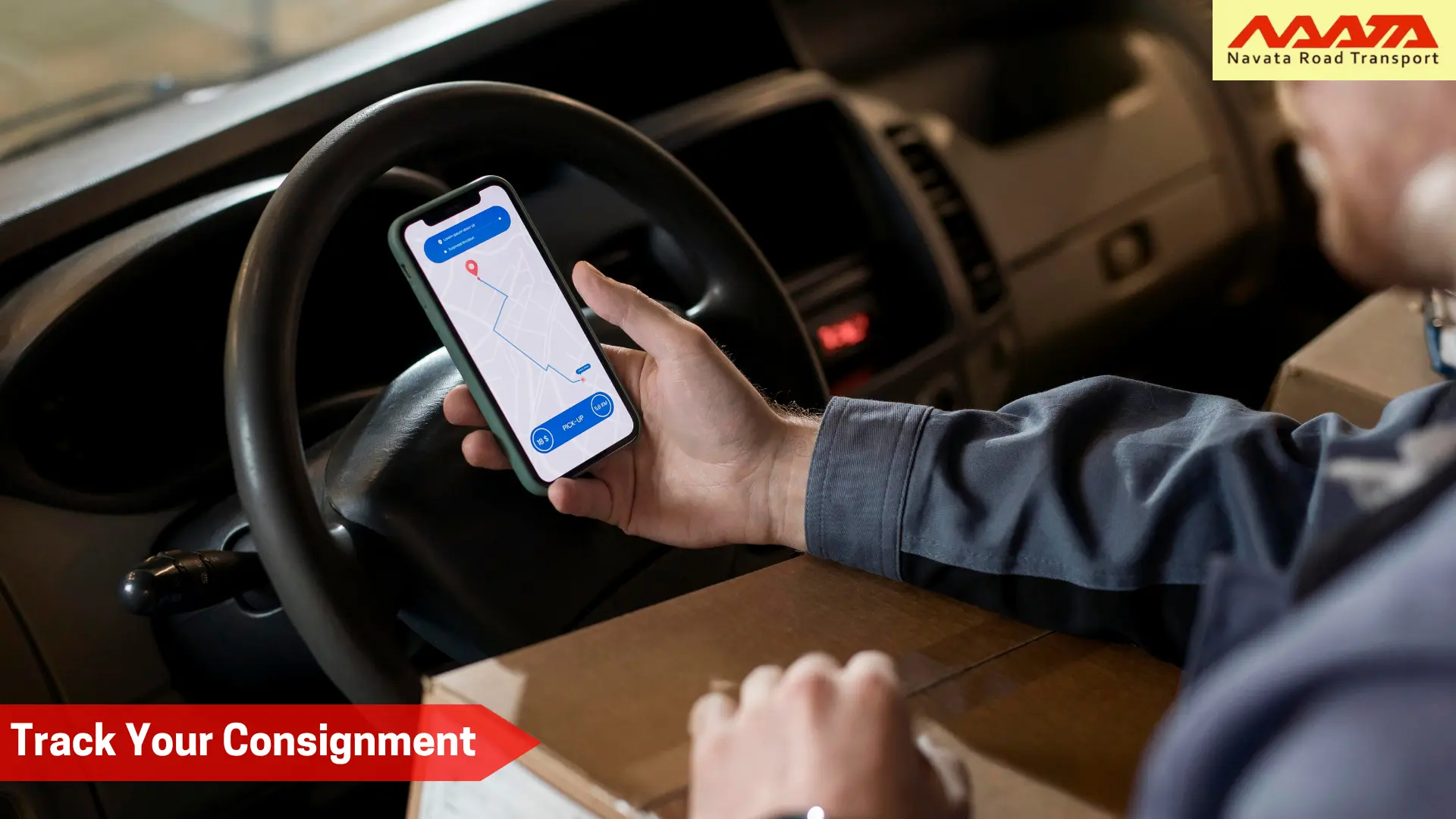
If you already have a consignment moving with Navata Road Transport, you don’t need a general explainer you need a status update. Use Navata’s official Track Consignment page to check your shipment status directly:
- By LR number: Enter the Lorry Receipt (LR) number printed on your consignment note or invoice to pull the current status and movement history for that shipment.
- By registered mobile number: If you don’t have the LR number to hand, your registered mobile number can be used to look up recent consignments linked to it.
A few things worth knowing before you check
Status updates reflect scan and movement events as they are recorded, so very recent pickups may take a short time to appear. Keep your LR number or invoice handy it’s the fastest, most accurate way to get an exact match, especially if multiple consignments are linked to the same mobile number. For anything the online tracker can’t resolve, Navata’s customer support team can look into the consignment directly using the same LR number.
Note on third-party “Navata tracking” sites: Many independent websites (not operated by Navata) also claim to offer Navata consignment tracking. Only www.navata.com/track-consignment pulls status directly from Navata’s own systems; always check your shipment there first.
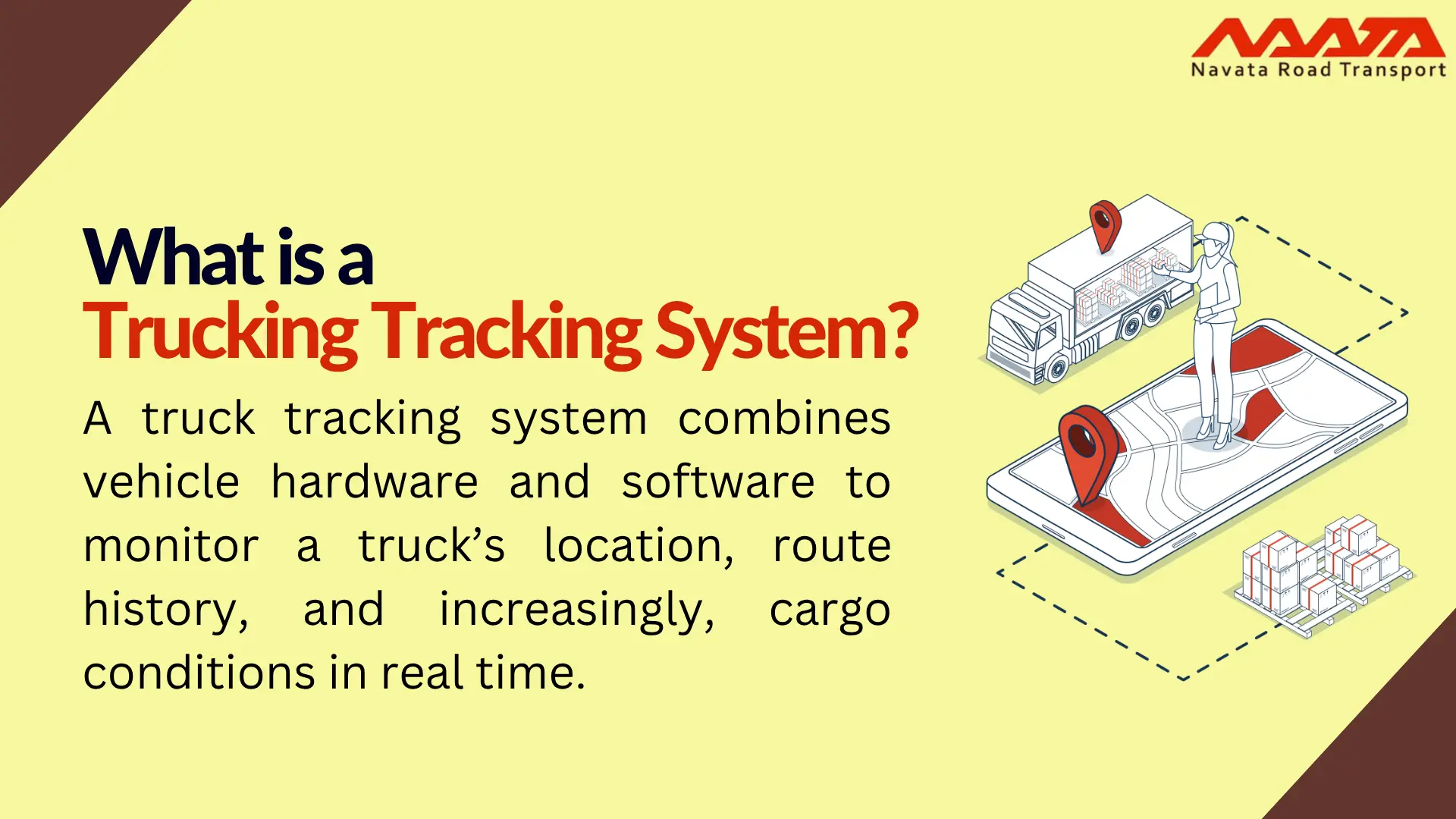
What Is Trucking Tracking System?
GPS truck tracking uses a tracking device installed in the vehicle to collect location and movement data. This information is transmitted through cellular or satellite networks to cloud-based software, where it is processed and displayed on dashboards. Fleet managers can monitor live locations, routes, speeds, stops, and receive alerts.
How Real-Time Truck Tracking Actually Works
Understanding the mechanics helps explain why some systems are more reliable than others.
Device installation
A GPS/GPRS tracking unit is fitted to the vehicle, either hardwired to the vehicle’s electrical system for a permanent install or plugged into the OBD (On-Board Diagnostics) port for a faster, non-permanent setup. Some fleets also tag individual consignments or containers with a secondary tracker or RFID tag for shipment-level (not just vehicle-level) visibility.
Data transmission
The device continuously calculates its position from GPS/GNSS satellites and transmits that position along with speed, ignition status, and (on more advanced units) driving-behavior data over a cellular (GPRS/4G) network. In regions with poor cellular coverage, satellite-linked units keep transmitting where standard GPRS would drop out.
Cloud processing
Incoming location pings are processed on a server platform, matched to routes, and checked against defined rules geofences, expected delivery windows, permitted operating hours, and speed limits.
Dashboard and app display
The processed data appears as a live map with vehicle markers, historical route playback, and consignment-level status, viewable by fleet managers on a desktop dashboard and, for customers, as a simplified tracking view or status page.
Alerts and automation
The system raises automatic alerts for events that need attention, such as unscheduled stops, route deviation, unusual idling, geofence entry/exit at a warehouse or customer site, and estimated delay against a delivery commitment, instead of requiring someone to watch the map continuously.
Key Benefits of a Trucking Tracking System
For a fleet operator or a shipper choosing between providers, the benefits usually fall into six categories:
- Real-time shipment visibility: Both the operations team and the end customer can see exactly where a consignment is, reducing “where is my shipment” calls and improving trust.
- Lower fuel costs: Route optimization, idling alerts, and driving-behavior monitoring directly reduce fuel consumption across a fleet.
- Improved driver safety: Speed alerts, driving-behavior scoring, and route-deviation monitoring support safer driving and evidence-based coaching.
- Better delivery accuracy: Live ETAs and geofence-triggered status updates make delivery windows more predictable.
- Theft prevention and recovery: Continuous location data and geofence alerts make unauthorized stops or route deviations immediately visible.
- Data-driven fleet decisions: Historical route, utilization, and idle-time data feed directly into fleet-sizing and cost-control decisions.
Types of Truck Tracking Systems Used in India
Not every tracking system uses the same underlying technology. The right choice depends on fleet size, route geography, and how granular the visibility needs to be.
Vehicle Tracking Types at a Glance
| Type | How It Works | Best Suited For |
|---|---|---|
| GPS/GPRS-based tracking | GPS location is sent over the cellular network at regular intervals. | Most road fleets with reliable network coverage. |
| Satellite-linked tracking | Location is transmitted via satellite instead of cellular towers. | Remote or low-network-coverage routes. |
| RFID-based tracking | Tagged vehicles or containers are detected at fixed RFID readers. | Yard and checkpoint-level visibility. |
| OBD-based (plug-in) tracking | A tracker connects directly through the vehicle's OBD port. | Leased fleets and non-permanent installations. |
| Telematics/IoT-integrated | Combines location data with engine diagnostics, fuel data, and driver-behavior sensors. | Fleets needing operational insights, not just location data. |
| Video telematics | Adds dashcam footage to location and driving-behavior data. | Safety-focused fleets and incident documentation. |
How to Choose the Right Trucking Tracking System
For fleet operators evaluating providers, the decision usually comes down to five practical questions:
- Coverage: Does the provider’s network reliably cover the routes you actually run, including any low-connectivity stretches?
- Update frequency: How often does the system refresh vehicle location near real-time, or only periodic pings?
- Integration: Can the platform integrate with your existing dispatch, WMS, or ERP systems?
- Alerting: Does it support the specific alerts your operation needs geofencing, delay flags, driving-behavior alerts?
- Customer-facing visibility: Can you extend a simplified tracking view to your own customers?
How Navata Uses Tracking Technology to Keep Freight Visible
As a road transport and logistics operator, Navata applies tracking and status-visibility technology across its consignment network so that both operations teams and customers can check shipment status without waiting on a manual update. That visibility is what powers the Track Consignment tool referenced above the fastest way to check the real-time status of a shipment moving with Navata.
Track Your Shipment, or Talk to Navata
A modern trucking tracking system is what turns “the truck left the warehouse” into a live, checkable status. If that’s what brought you here, your shipment status is one LR number away.
Thanks for Reading: Trucking Tracking System in India: How It Works and How to Track Your Shipment
How do I track my Navata consignment?
What is an LR number, and where do I find it?
Why does a trucking tracking system matter if I'm waiting for one delivery?
What is the difference between GPS tracking and RFID tracking?
Do all trucking tracking systems work in low-network areas?
Recent Posts